In weaving mills, loom efficiency is often seen as just another number on a daily report. In reality, it shapes production output, cost per meter, delivery timelines, and profitability. A small drop from 85% to 70% can create major production loss over a month.
Many mill owners look only at machine downtime, but loom efficiency is influenced by machines, people, material quality, planning, and management systems. Improving it means understanding all of these factors together.
Why Loom Efficiency Matters for Textile Mills
Loom efficiency directly affects production output, cost per meter, delivery timelines, and profit margins. Even a small drop can cause large losses over time, which is why smart mill owners focus on both machine and human factors.
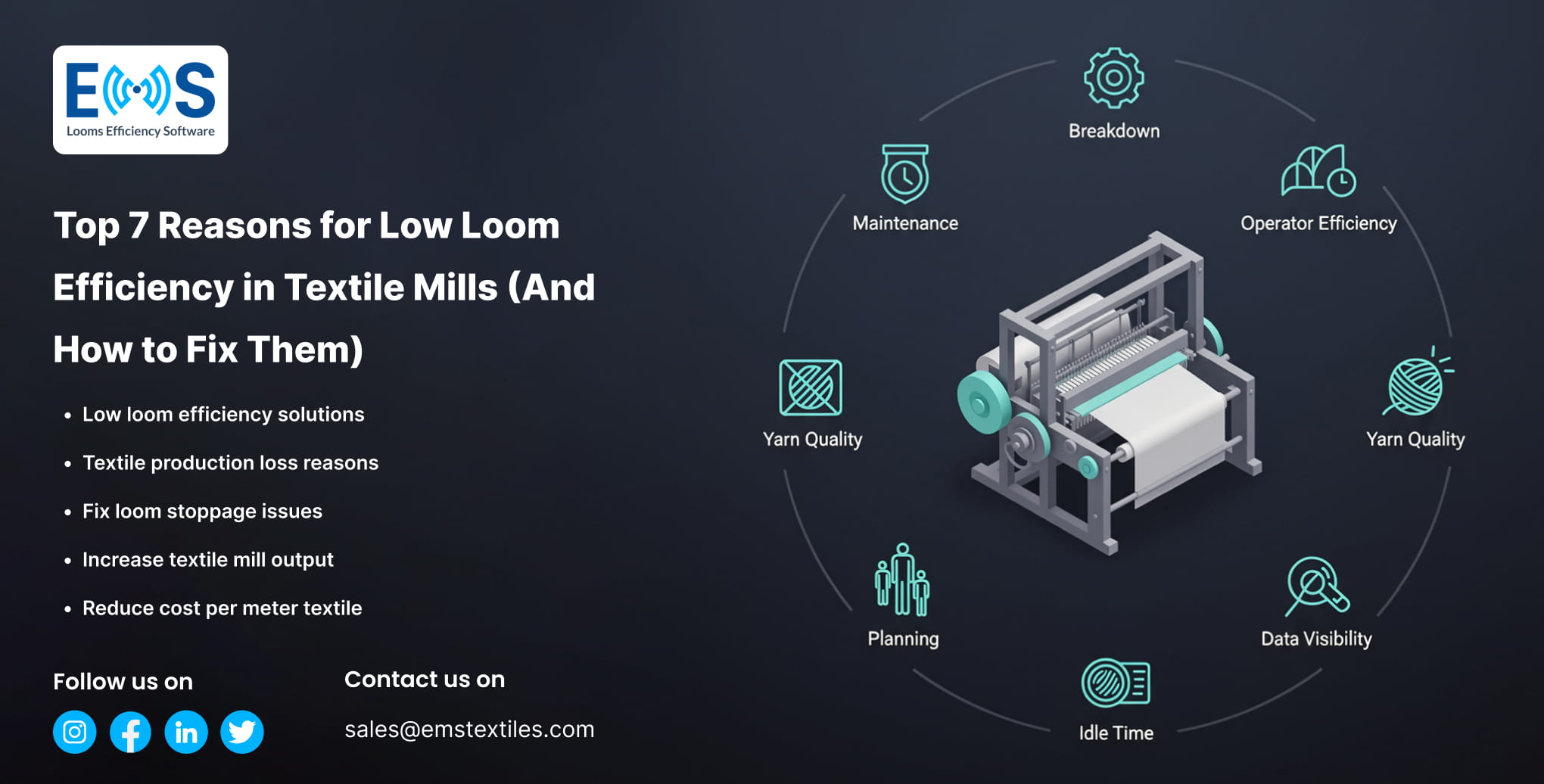
Top 7 Causes of Low Loom Efficiency
1. Frequent Loom Breakdowns
Broken warp, weft issues, mechanical faults, and electrical problems can stop looms repeatedly. Even minor stoppages reduce efficiency when they happen again and again.
- Follow a regular maintenance schedule.
- Track breakdown history for every loom.
- Replace worn parts before they cause stoppages.
- Use real-time loom monitoring to catch problems early.
Many mills that monitor breakdowns in real time improve efficiency by 10-15%. For the business impact, read the local guide on hidden costs of loom downtime.
2. Poor Preventive Maintenance Planning
Machines that are repaired only after failure usually create longer downtime, emergency repair cost, and surprise production loss.
- Create weekly and monthly maintenance checklists.
- Assign clear responsibility for each task.
- Verify that maintenance is completed, not just noted.
- Move away from paper registers when digital tracking is possible.
For a structured process, use the preventive maintenance checklist for weaving machines.
3. Low Operator Efficiency
Modern looms still depend on operators. Slow response to stoppages, poor yarn handling, unclear expectations, or lack of training can increase idle time and reduce output.
- Train operators regularly.
- Track operator-wise efficiency.
- Set fair performance goals.
- Use monitoring data to measure response time.
4. Poor Yarn Quality
Uneven, weak, or contaminated yarn causes frequent thread breaks and stoppages. Material quality has a direct effect on machine efficiency.
- Choose consistent yarn suppliers.
- Check each new yarn batch before production.
- Record yarn lots that create issues.
- Store yarn properly to prevent damage.
5. Inefficient Production Planning
Poor planning leads to frequent style changes, long setup time, overloaded machines, and idle machines. Smart scheduling can improve efficiency without buying new machines.
- Fine-tune production schedules.
- Reduce unnecessary style changes.
- Group similar orders together.
- Balance shift workloads carefully.
6. Lack of Real-Time Production Visibility
Manual logbooks, end-of-shift reports, and Excel sheets show yesterday's problems. By the time the issue is visible, the loss has already happened.
- Use a real-time loom monitoring system for instant updates.
- Track production, downtime, and efficiency live.
- Set alerts for stoppages.
- Use dashboards for faster decisions.
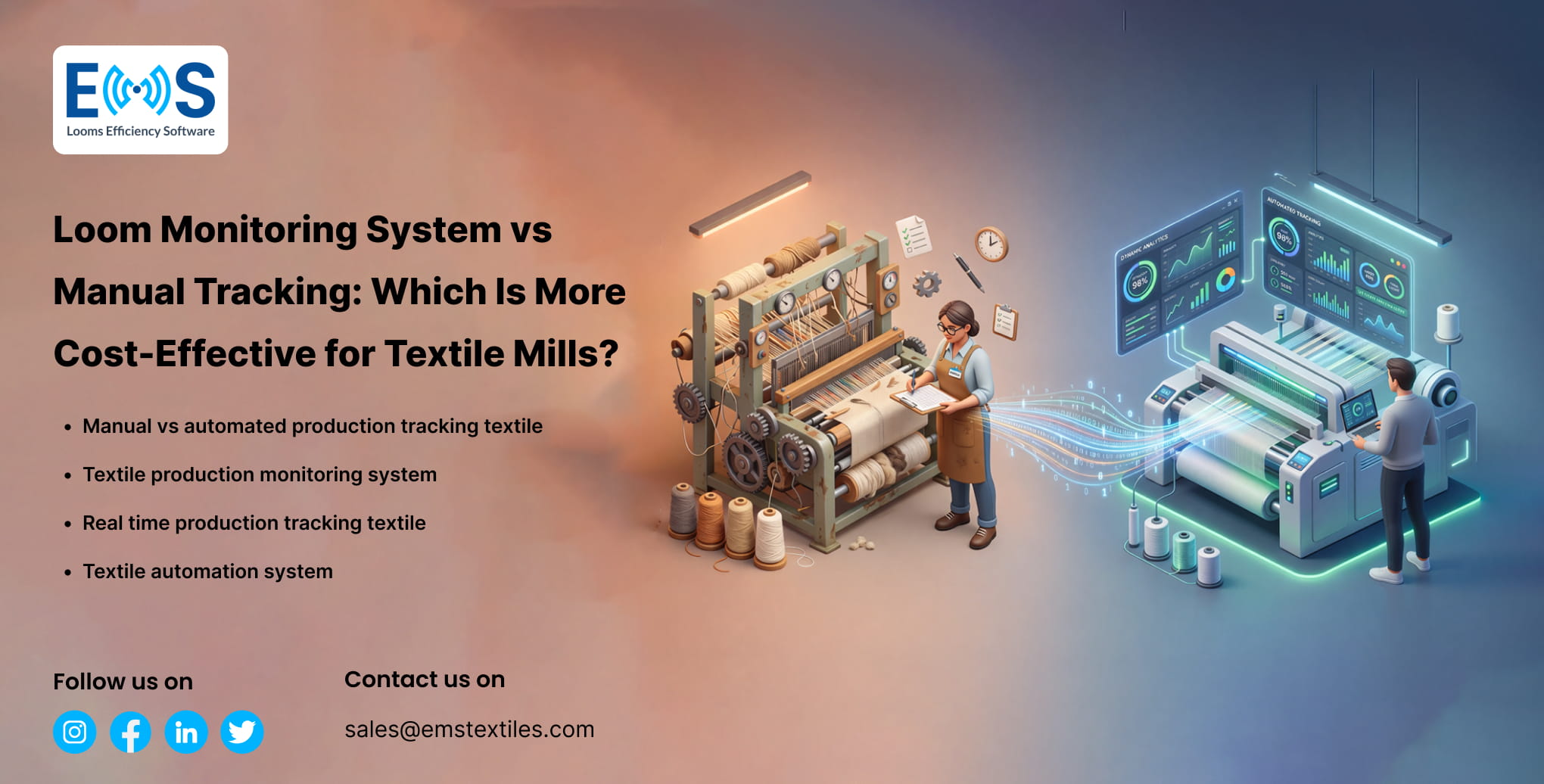
Compare the options in loom monitoring system vs manual tracking.
7. High Idle Time Between Jobs
Waiting for instructions, raw material, or setup between orders looks small in the moment, but it creates a large efficiency loss over time.
- Standardize setup processes.
- Prepare raw material before job change begins.
- Improve coordination between departments.
- Measure idle time with monitoring data.
The Power of Loom Monitoring Systems
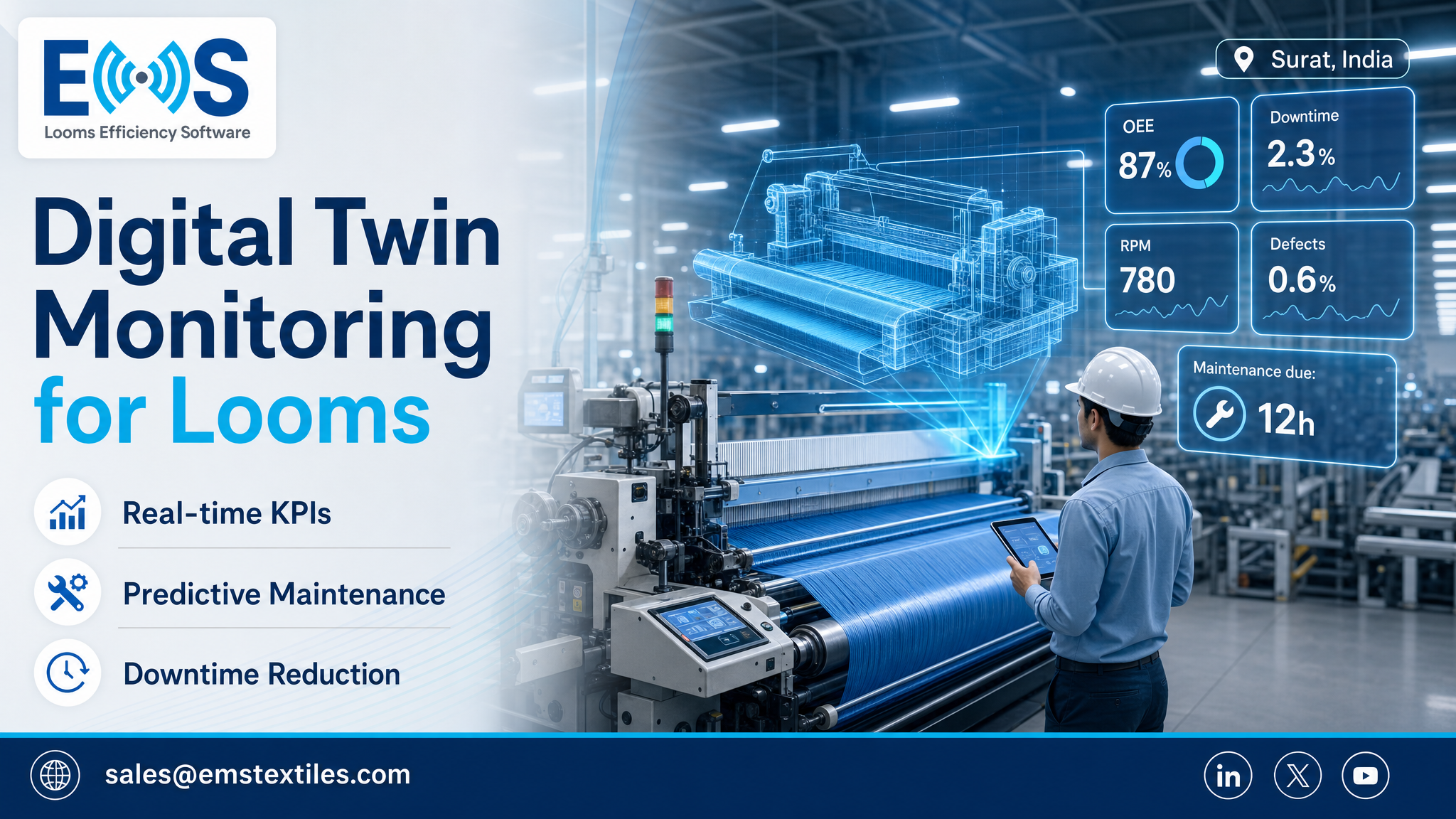
With EMS, mills can see live loom efficiency, understand downtime reasons, track operator performance, and spot problems quickly. Real-time data helps managers move from guesswork to faster, smarter decisions.
Final Thoughts
Low loom efficiency is rarely caused by one problem. It is usually a mix of machine issues, operator habits, planning gaps, material problems, and lack of visibility. Start by finding your true efficiency, identifying the biggest losses, and solving one problem at a time.
Ready to boost loom efficiency?
EMS helps textile mills increase production, cut downtime, and see what is happening in the factory in real time. Reach out for a free demo and see how live data can transform your mill performance.
Ready to Transform Your Weaving Operations?
Book a free demo and see how EMS monitoring software can turn live loom data into faster decisions and measurable ROI.
Book a Free Demo