In textile manufacturing, every loom counts. When a machine stops, production slows, costs rise, and delivery schedules become harder to maintain. The obvious loss is missed output, but the hidden cost is often much bigger.
What Is Loom Downtime?
Loom downtime is the period when a loom is not producing fabric because of breakdowns, yarn breaks, operator delay, style change, maintenance, electrical issues, or waiting for material. Some downtime is planned, but unplanned downtime is where factories lose the most.
The Hidden Costs Behind Downtime
1. Production Loss
Every stopped loom reduces daily output. If several looms stop for small intervals, the total loss can become large by the end of the month.
2. Labour Cost Without Output
Operators, supervisors, and support staff still cost money when machines are idle. Downtime means the factory is paying for time that is not creating production.
3. Delayed Deliveries
Unplanned stoppages disturb schedules. Delays can affect customer trust, repeat orders, and the ability to take urgent work confidently.
4. Higher Maintenance Cost
When small problems are not tracked early, they often become larger repairs. Emergency maintenance usually costs more than preventive maintenance.
5. Energy Waste
Factories still consume power for lighting, air systems, compressors, and support equipment even when looms are not producing as expected.
6. Poor Decision-Making
When downtime is recorded manually, reports are delayed and incomplete. Managers may make decisions without knowing the true cause of loss.
Why Manual Tracking Misses Downtime
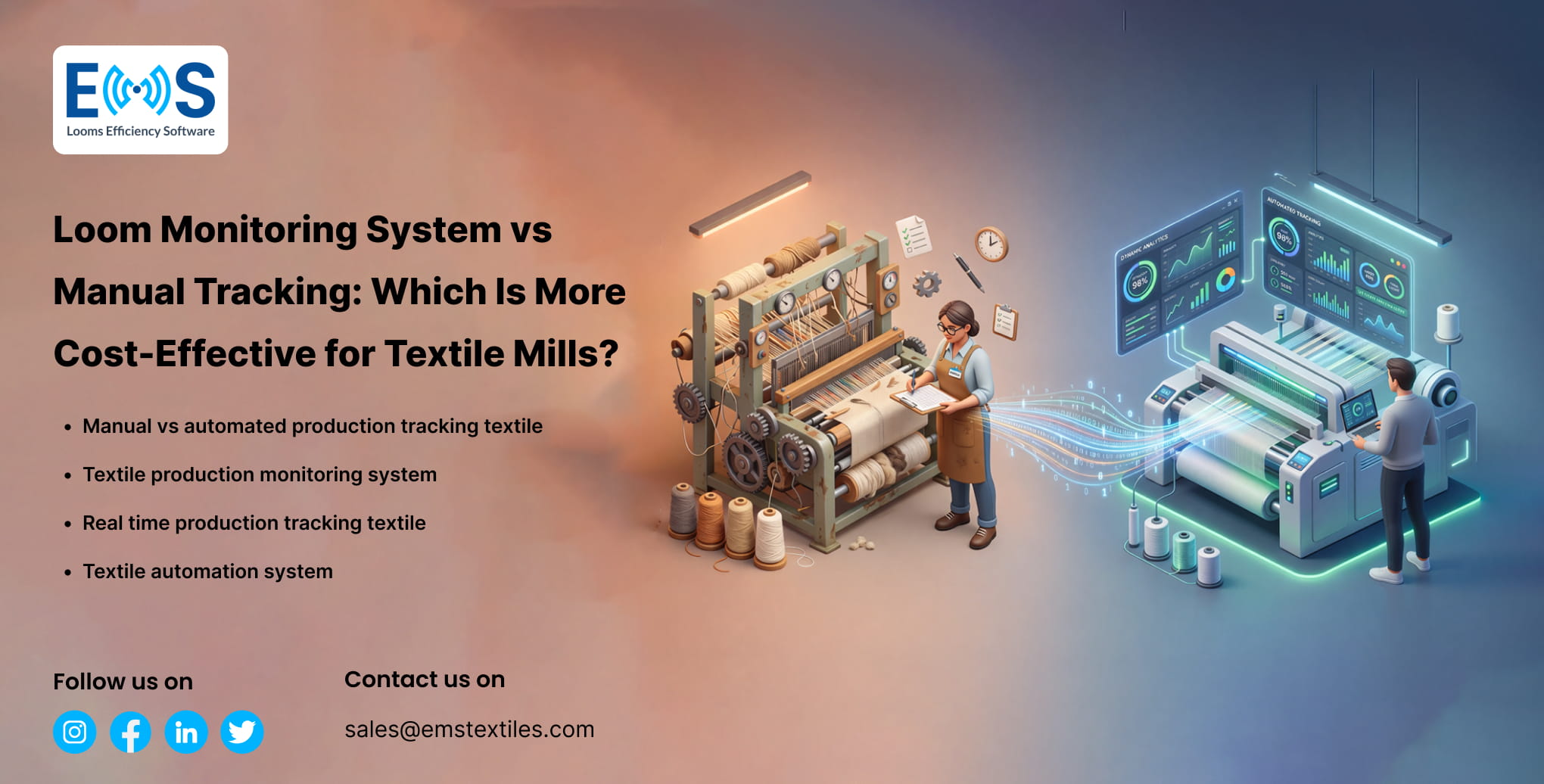
Many mills depend on registers or shift-end reports. These systems often miss short stoppages, operator delays, recurring faults, and exact downtime reasons. Without live visibility, managers see the loss only after it has already happened.
How Real-Time Monitoring Helps
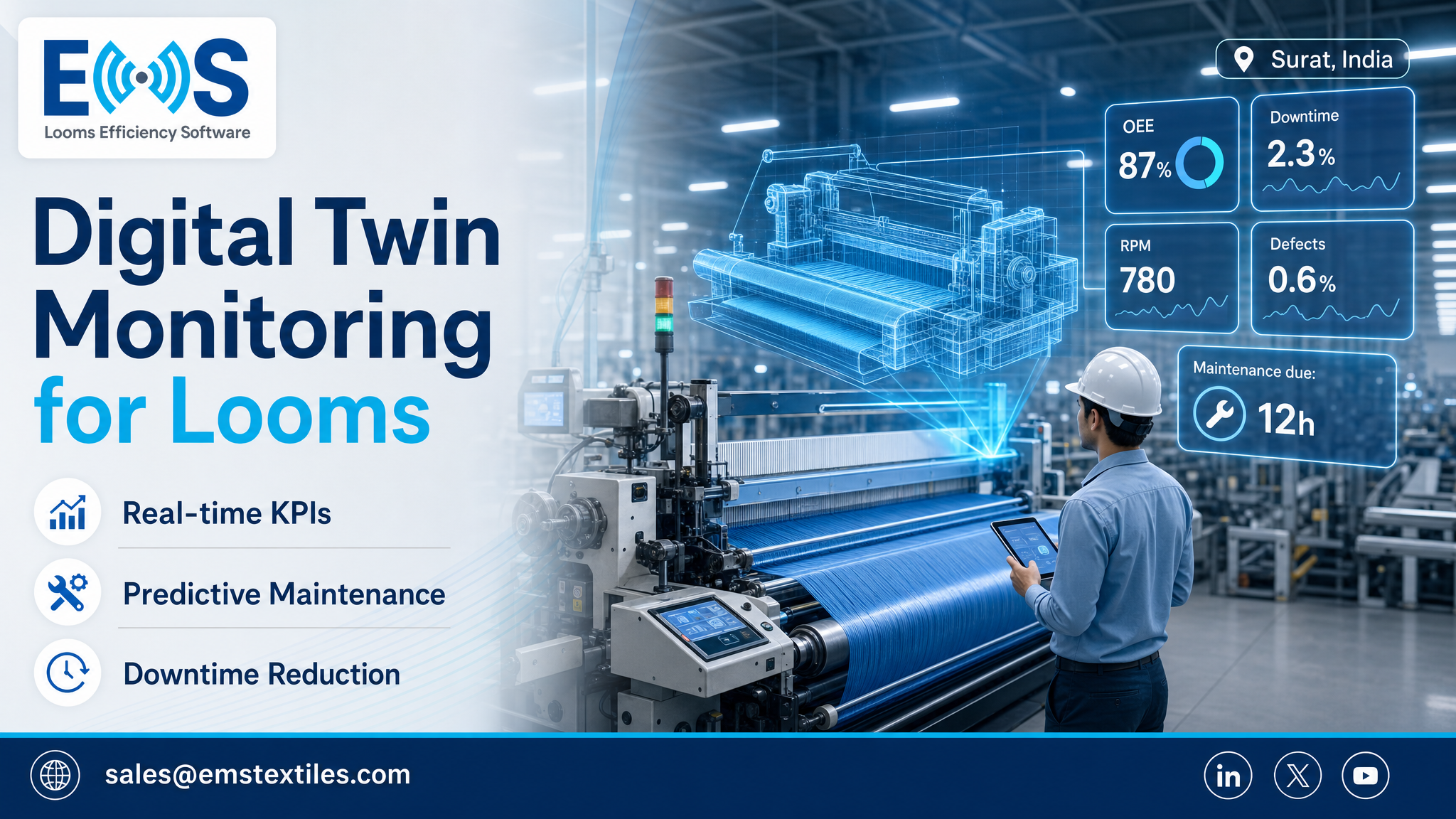
- Shows live machine status for every loom.
- Alerts teams when a machine stops.
- Tracks downtime reason and duration.
- Highlights recurring faults.
- Creates accurate shift-wise and day-wise reports.
- Helps managers plan maintenance and operator response.
Simple Example of Monthly Loss
| Factor | Example |
|---|---|
| Number of looms | 100 |
| Average idle time | 1 hour per loom per day |
| Loss per hour | Rs. 150 |
| Daily hidden loss | Rs. 15,000 |
| Monthly hidden loss | Rs. 3,90,000 |
Final Thoughts
Downtime is one of the biggest profit leaks in textile mills. The solution starts with visibility. When owners and supervisors know which loom stopped, why it stopped, and how long it stayed idle, they can act faster and reduce production loss.
Want to reduce downtime?
EMS gives textile factories live loom monitoring, downtime alerts, and practical reports so every shift can perform better.
Ready to Transform Your Weaving Operations?
Book a free demo and see how EMS monitoring software can turn live loom data into faster decisions and measurable ROI.
Book a Free Demo