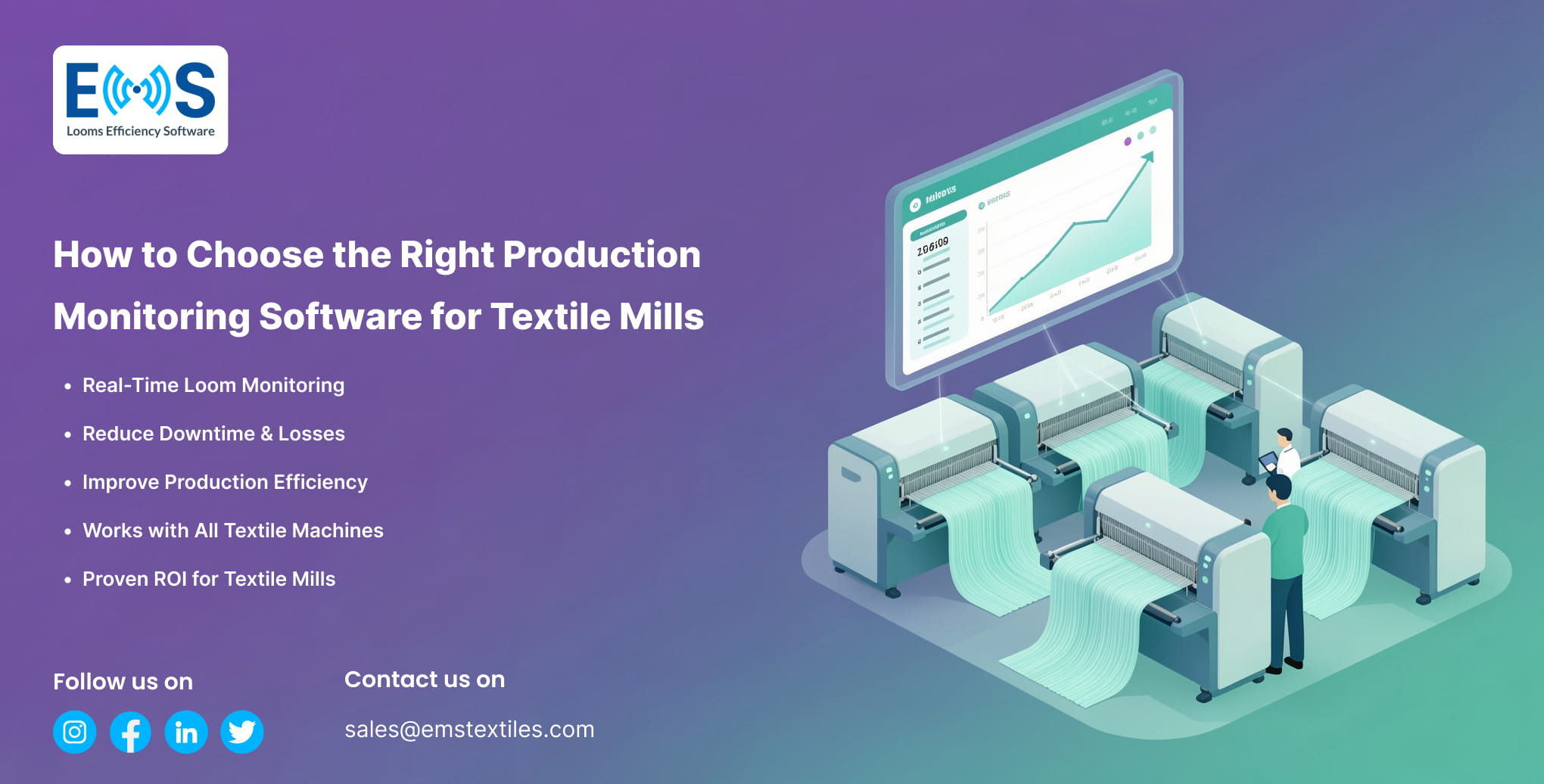
Textile mills are under constant pressure to increase output, reduce downtime, maintain quality, and deliver on time. Manual registers and delayed reports make this difficult because they only show problems after losses have already happened.
A production monitoring software can change this by giving live machine data, operator performance, efficiency reports, downtime analysis, and alerts. But not every software is built for weaving mills, so the selection process matters.
Start with Your Factory's Real Problems
Before comparing software features, identify what you want to improve. Common goals include reducing loom downtime, increasing machine utilization, improving operator response time, controlling production loss, and getting accurate reports without manual work.
Features Every Textile Mill Should Look For
- Real-time loom monitoring: Live running, stopped, and idle status for every machine.
- Downtime tracking: Clear reason-wise stoppage data so teams know where time is lost.
- Production reports: Shift-wise and day-wise reports for output, efficiency, and machine performance.
- Operator tracking: Data to understand response time and productivity across teams.
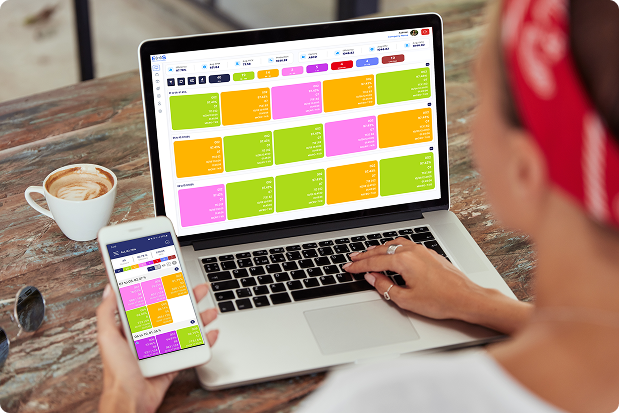
- Mobile and TV dashboard access: Factory owners and supervisors should see live data from anywhere.
- Alerts and notifications: Fast alerts help teams respond before small stoppages become large losses.
Check Whether It Fits Your Looms
Many textile mills use a mix of loom types and brands. The software should work with your existing setup instead of forcing expensive replacement. Ask whether the system supports waterjet, air jet, jacquard, circular, and other machines used in your factory.
Evaluate Ease of Use
A monitoring system is useful only when the team uses it daily. The dashboard should be simple enough for owners, managers, supervisors, and operators to understand quickly. Avoid systems that need heavy training for basic reports.
Understand ROI, Not Just Price
The cheapest system is not always cost-effective. A good system should reduce hidden losses, improve decisions, and pay back the investment through better production control.
| What to Check | Why It Matters |
|---|---|
| Downtime reduction | Directly improves output and delivery reliability. |
| Idle time control | Helps recover hours that are normally invisible. |
| Report automation | Saves supervisor time and reduces manual errors. |
| Decision speed | Live data helps managers act during the shift, not tomorrow. |
Look for Local Support and Implementation Help
Software selection is not only about the dashboard. Installation, networking, device setup, training, and support are equally important. Choose a provider that understands textile factories and can help your team adopt the system smoothly.
Common Mistakes to Avoid
- Choosing software only because it is cheap.
- Ignoring whether the system supports your loom types.
- Not checking mobile or remote dashboard access.
- Buying a system without clear downtime reporting.
- Skipping team training after installation.
Quick Checklist Before You Decide
- Does it show live machine status?
- Does it track production and downtime automatically?
- Can owners access reports from mobile?
- Does it support your existing looms?
- Is support available after installation?
- Can it show ROI clearly?
Choosing software for your mill?
EMS is built for textile factories that need live loom monitoring, accurate production reports, and practical support. Book a demo to see how it fits your factory.
Ready to Transform Your Weaving Operations?
Book a free demo and see how EMS monitoring software can turn live loom data into faster decisions and measurable ROI.
Book a Free Demo