The Dawn of Intelligent Weaving: AI's Revolution in Textile Manufacturing
The Indian textile industry, a cornerstone of our economy and a global leader, stands at the precipice of a monumental transformation. For centuries, the rhythmic clatter of loom machines has defined our mills. Now, a new intelligence is joining that rhythm: Artificial Intelligence (AI). At EMS Textiles, we believe that integrating AI into smart loom machines isn't just an upgrade; it's a fundamental shift towards a future of unprecedented efficiency, quality, and profitability for textile manufacturers in Surat and across India.
In an increasingly competitive global market, simply having advanced machinery is no longer enough. The demand for flawless fabric, minimal waste, and rapid production cycles requires a level of precision and foresight that human operators, however skilled, cannot consistently provide. This is where AI steps in, turning raw data into actionable insights and transforming traditional looms into truly smart, self-optimizing weaving powerhouses.
AI's Core Applications in Smart Loom Machines: Unlocking New Potential
Predictive Maintenance: Anticipating the Unforeseen
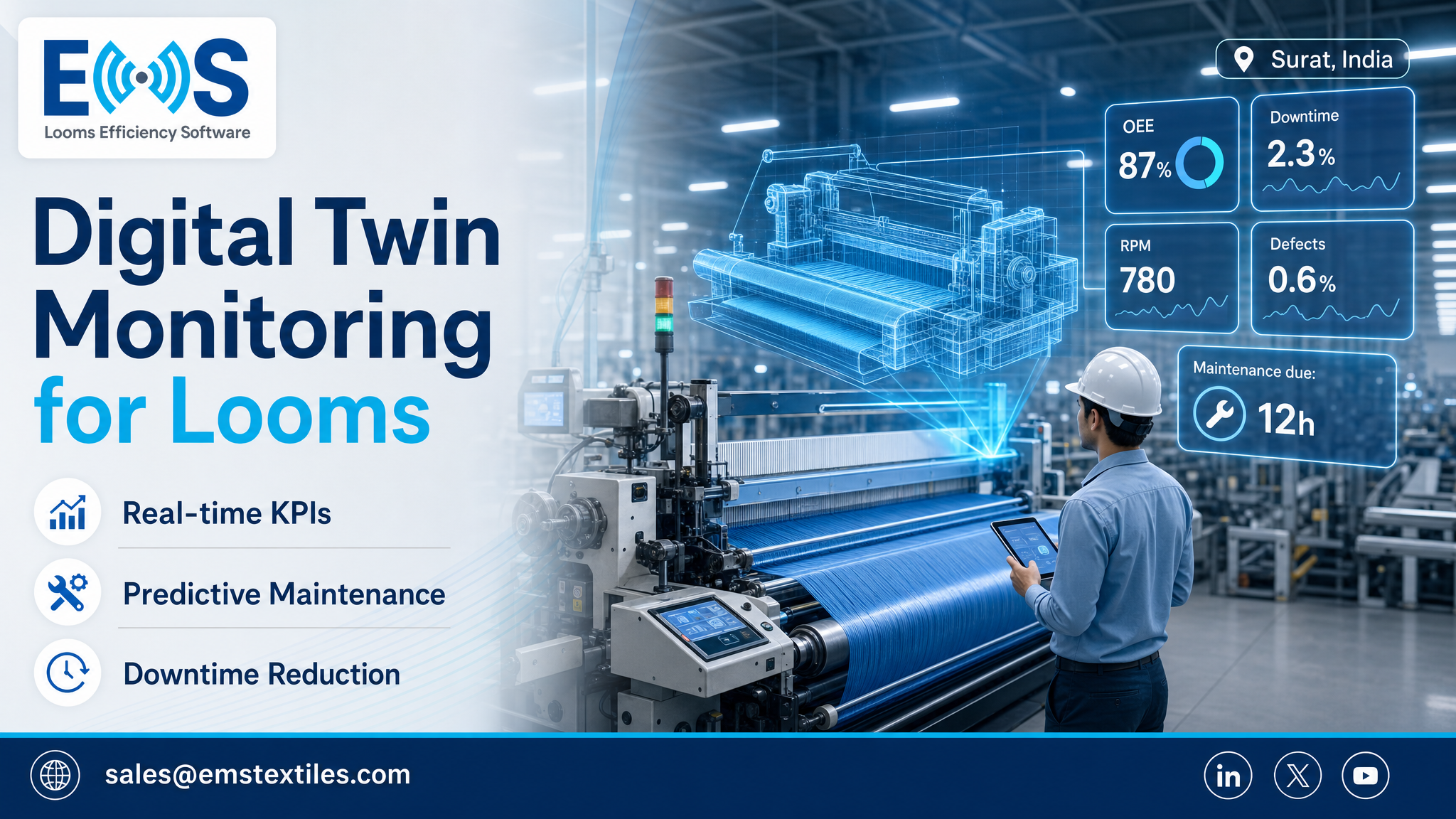
One of the most disruptive applications of AI in textile manufacturing is predictive maintenance. Historically, loom maintenance has been either reactive (fixing problems after they occur) or time-based (scheduled maintenance regardless of actual wear). Both approaches lead to inefficiencies � unexpected breakdowns cause costly downtime, while unnecessary maintenance wastes resources.
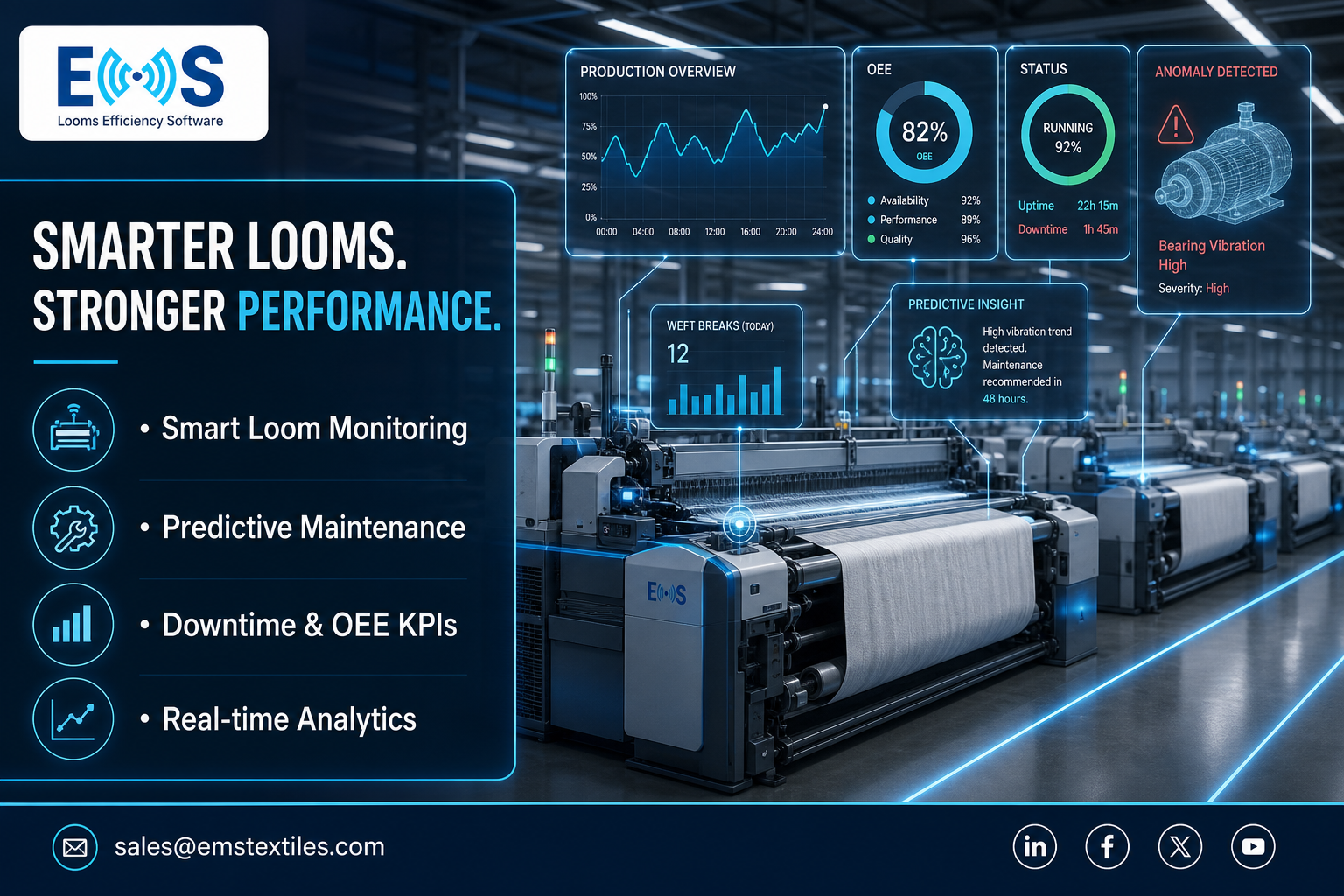
AI-powered systems, like those monitored by EMS Textiles� software, continuously collect and analyze vast amounts of data from sensors embedded within loom machines � monitoring vibrations, temperature, motor currents, and more. By identifying subtle patterns and deviations from normal operating conditions, AI algorithms can predict potential component failures before they happen. This enables mills to:
- Schedule maintenance proactively: Repairs can be planned during non-production hours, minimizing disruption.
- Reduce unexpected breakdowns: Avoiding costly halts in production and missed deadlines.
- Optimize spare parts inventory: Ordering parts only when needed, reducing carrying costs.
- Extend machine lifespan: Timely interventions prevent minor issues from escalating into major damage.
Automatic Fault Detection: Pinpointing Issues Instantly
Fabric defects can be costly, leading to rejections, rework, and wasted materials. Traditional fault detection relies heavily on human inspection, which is prone to fatigue, inconsistency, and delays. AI brings a new level of precision to this critical area.
Automatic fault detection systems use advanced computer vision and machine learning algorithms to monitor the weaving process in real-time. Cameras and sensors continuously scan the fabric as it's being woven, identifying anomalies such as broken weft/warp yarns, oil stains, float defects, and uneven tension. Upon detection, the AI can:
- Alert operators immediately: Allowing for instant corrective action.
- Stop the loom automatically: Preventing further defect generation and minimizing waste.
- Categorize and log defects: Providing valuable data for process improvement.
This immediate feedback loop significantly improves fabric quality from the very first meter, reducing the need for costly post-production inspection and increasing overall yield.
Intelligent Quality Monitoring: Beyond Human Eyes
Beyond simple fault detection, AI offers comprehensive intelligent quality monitoring. It's about maintaining consistent, high-standard fabric production throughout the entire batch. AI systems can learn the acceptable parameters for specific fabric types and monitor deviations, ensuring that the final product consistently meets client specifications.
This includes:
- Continuous parameter checks: Monitoring tension, pick density, and selvedge quality against set standards.
- Trend analysis: Identifying subtle degradations in quality over time that might indicate underlying machinery issues or raw material variations.
- Predicting quality variations: Using historical data to forecast potential quality shifts and recommend adjustments.
The result is a more reliable product, fewer customer complaints, and a stronger reputation for quality � crucial advantages for any textile mill aiming for global competitiveness.
Optimizing Operations & Boosting Profitability with AI
Production Optimization: Smarter Decisions, Better Throughput
AI's analytical capabilities extend beyond individual machine health and quality. It can look at the entire weaving shed, identifying bottlenecks, optimizing production schedules, and even suggesting the ideal loom settings for different fabric types. This holistic approach to production optimization can lead to significant gains.
- Dynamic scheduling: AI can adjust loom assignments and production sequencing based on real-time order changes, machine availability, and material flow.
- Recipe optimization: Recommending optimal speeds, tensions, and other parameters to maximize output without compromising quality.
- Resource allocation: Ensuring efficient use of raw materials, energy, and labor across the entire facility.
By leveraging AI, textile mills can achieve higher throughput with the same or even fewer resources, directly impacting the bottom line.
Real-Time Performance Analytics: The Pulse of Your Mill
For mill owners and managers, having an accurate, up-to-the-minute understanding of their operations is invaluable. AI-powered systems provide real-time performance analytics, delivering comprehensive dashboards and reports that offer deep insights into every aspect of the weaving process.
This includes:
- Overall Equipment Effectiveness (Efficiency) scores for individual looms and the entire plant.
- Production rates, efficiency, and utilization.
- Energy consumption patterns and opportunities for savings.
- Detailed reports on defect rates and causes.
With EMS Textiles' solutions, these analytics are not just data points; they are actionable intelligence, empowering management to make informed decisions swiftly, identify underperforming assets, and continually refine their operations for maximum profitability.
The Tangible Benefits: Why AI is a Smart Investment for Indian Mills
Embracing AI in your textile manufacturing operations is more than just adopting new technology; it's investing in a future where your mill operates at peak efficiency, produces superior quality fabric, and consistently achieves higher profitability. The benefits are clear and measurable:
| Metric | Traditional Approach | AI-Powered Approach | Impact on Mill |
|---|---|---|---|
| Downtime | Reactive repairs, unplanned stoppages | Predictive maintenance, proactive fixes | Up to 20-30% reduction |
| Fabric Quality | Manual inspection, delayed defect detection | Continuous AI monitoring, immediate fault alerts | 10-15% reduction in defects |
| Production Efficiency | Manual adjustments, experience-based | AI-driven optimization, real-time adjustments | 5-10% increase in output |
| Maintenance Costs | Higher due to catastrophic failures | Lower due to scheduled, targeted maintenance | 15-25% cost reduction |
| Waste Reduction | Higher due to undetected faults | Significant reduction through early detection | Up to 8% material savings |
| Energy Consumption | Standard operating procedures | AI-optimized settings, reduced idle time | Potential 5-10% energy savings |
For Indian textile owners, these figures represent a substantial competitive advantage, allowing you to meet global standards and exceed customer expectations consistently.
Checklist: Integrating AI into Your Textile Operations
Ready to bring the power of AI to your weaving mill? Here�s a practical checklist to guide your journey:
- Assess Your Current Infrastructure: Evaluate your existing loom machines and IT systems to identify compatibility and potential upgrade needs.
- Define Your Specific Pain Points: Clearly articulate what you aim to improve � whether it's reducing downtime, enhancing quality, or boosting overall output.
- Choose the Right AI Solution Provider: Partner with experts like EMS Textiles who understand both AI technology and the nuances of textile manufacturing.
- Start with a Pilot Project: Begin with a limited deployment on a few looms to test the solution, gather data, and demonstrate ROI before scaling.
- Train Your Workforce: Ensure your operators and maintenance teams are comfortable with the new AI tools and understand their benefits.
- Scale and Refine: Gradually expand AI integration across your entire fleet, continuously monitoring performance and refining processes based on insights gained.
Partnering for the Future: EMS Textiles and Your Mill
The future of textile manufacturing is smart, interconnected, and driven by AI. At EMS Textiles, based right here in Surat, Gujarat, we are at the forefront of this revolution. Our specialized loom efficiency and machine monitoring software is designed to harness the power of AI, translating complex data into simple, actionable insights for your weaving operations.
We understand the unique challenges and opportunities within the Indian textile industry. Our solutions are tailored to help you not only keep pace with global technological advancements but to lead the way. By choosing EMS Textiles, you're not just adopting software; you're gaining a strategic partner dedicated to your mill's success and sustained profitability.
Ready to transform your loom machines with the power of Artificial Intelligence? Contact EMS Textiles today to learn how our AI-powered solutions can boost your mill's efficiency, quality, and profitability.
Ready to Transform Your Weaving Operations?
Book a free demo and see how EMS monitoring software can turn live loom data into faster decisions and measurable ROI.
Book a Free Demo