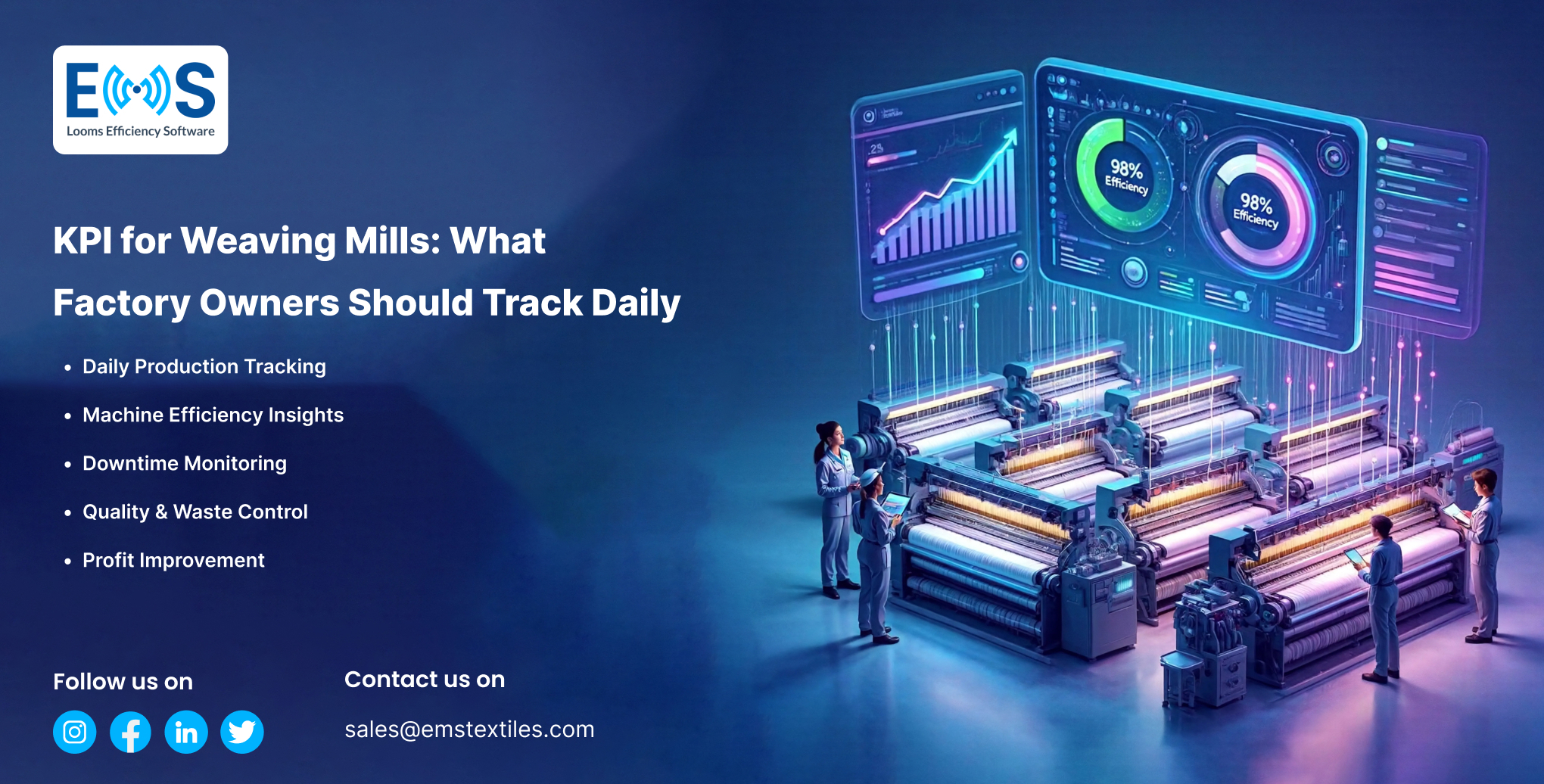
Running a weaving mill without clear KPIs is like running machines without a dashboard. Production may be happening, but owners may not know where losses are hidden, which machines are underperforming, or why delivery pressure is increasing.
What Is a KPI in a Weaving Mill?
A KPI, or key performance indicator, is a measurable number that shows how well the factory is performing. The right KPIs help owners track output, efficiency, downtime, machine utilization, labour performance, and production loss.
Why Daily KPI Tracking Matters
- Problems are identified early.
- Production planning becomes more accurate.
- Downtime can be reduced faster.
- Operators and supervisors become more accountable.
- Owners can make decisions using live data instead of assumptions.
Important KPIs to Track Daily
1. Total Production Output
Track how much fabric is produced in each shift and each day. Compare actual output with planned output to see whether the factory is on schedule.
2. Loom Efficiency Percentage
Loom efficiency shows how effectively machines are producing compared with available time. A small drop in efficiency can create major monthly loss.
3. Machine Downtime
Downtime shows how long looms are stopped and why. Track mechanical issues, yarn breaks, waiting time, operator delay, power issues, and maintenance stops.
4. Machine Utilization
Utilization shows how much of the available machine capacity is being used. Low utilization may indicate planning gaps, material shortage, or idle machines.
5. Operator Performance
Operator-wise data helps supervisors understand response time, output, and work distribution. It also helps identify training needs and strong performers.
6. Production Loss
Production loss is the output that could have been produced but was missed due to downtime, idle time, quality issues, or planning problems.
7. Maintenance Alerts
Recurring stoppages and repeated faults should be tracked daily. This helps maintenance teams act before a small issue becomes a breakdown.
Daily KPI Dashboard Summary
| KPI | What It Shows | Why It Matters |
|---|---|---|
| Total production | Actual output | Checks plan vs reality |
| Loom efficiency | Machine productivity | Shows overall health |
| Downtime | Stopped time and reasons | Finds loss sources |
| Utilization | Capacity usage | Improves planning |
| Operator performance | Team productivity | Improves accountability |
| Production loss | Missed output | Shows financial impact |
| Maintenance alerts | Repeated issues | Prevents breakdowns |
Manual Reports vs Real-Time KPI Tracking
Manual reports are usually delayed and may miss short stoppages. Real-time KPI tracking gives live data during the shift, so managers can react before losses become too large.
How EMS Helps Track KPIs
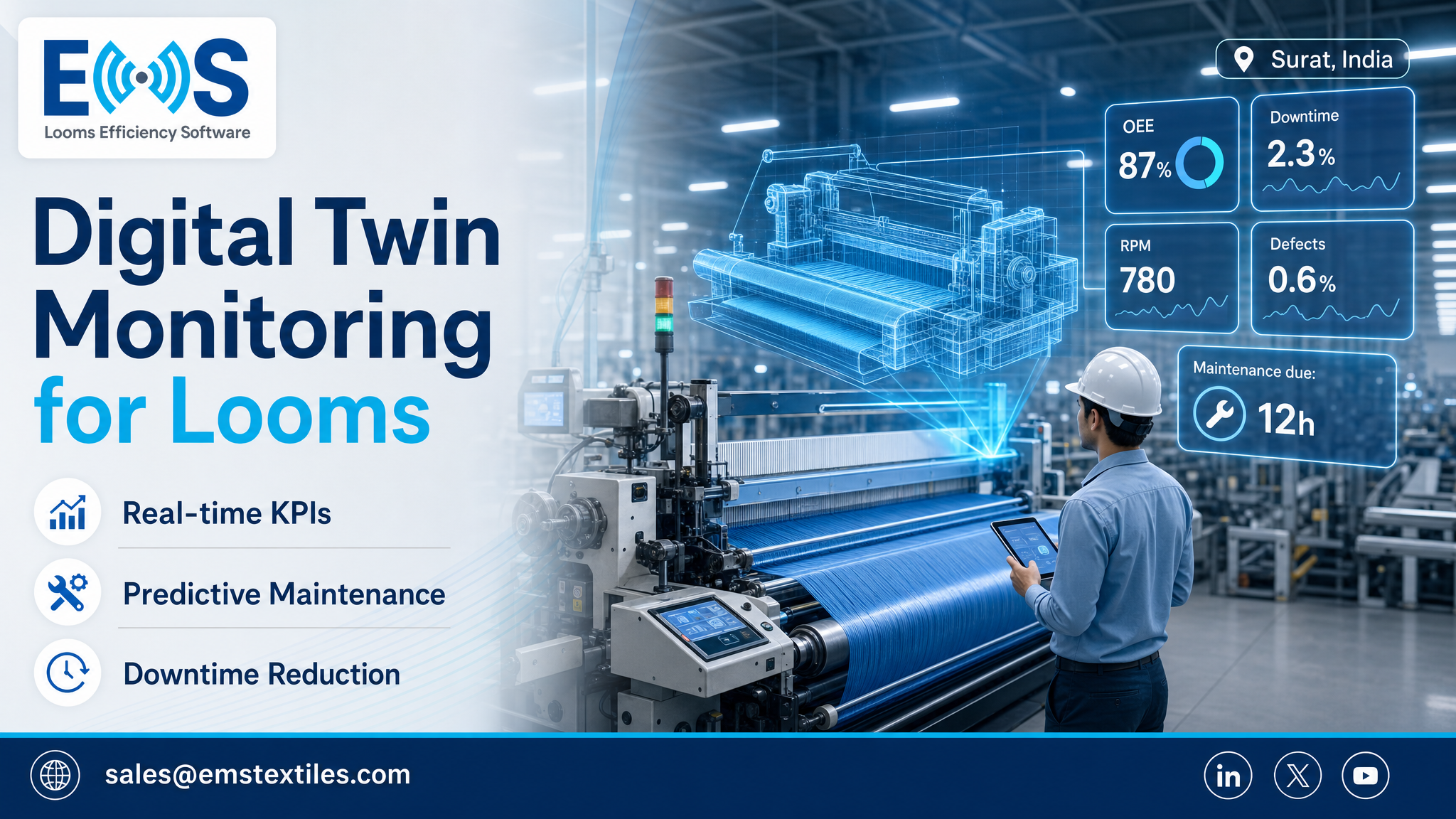
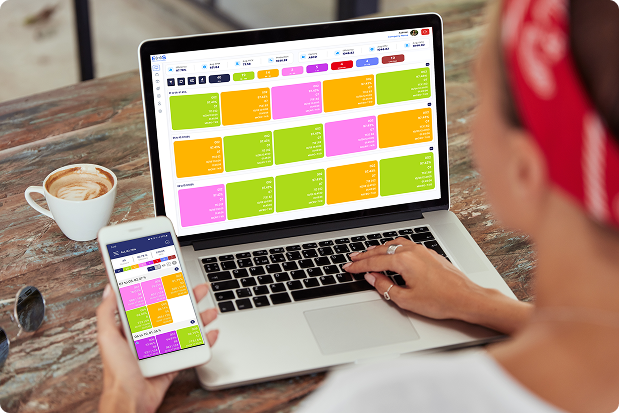
EMS gives factory owners live dashboards, machine-wise efficiency, downtime reports, operator performance, auto reports, and mobile access. This makes KPI tracking easier, faster, and more reliable.
Track daily KPIs with confidence.
EMS helps weaving mills convert machine data into practical reports so owners can improve production every day.
Ready to Transform Your Weaving Operations?
Book a free demo and see how EMS monitoring software can turn live loom data into faster decisions and measurable ROI.
Book a Free Demo