The hum of weaving looms has long been the heartbeat of textile manufacturing across India, especially in hubs like Surat. For generations, the industry has relied on skill, tradition, and often, manual oversight. But times are changing. We are now at the precipice of a new industrial revolution � Industry 4.0 � and it�s transforming how textile mills operate, bringing unprecedented levels of connectivity, intelligence, and efficiency.
For ambitious textile mill owners and production managers, Industry 4.0 isn�t just a buzzword; it�s a strategic imperative. It promises to unlock new potentials, address long-standing challenges like downtime and inconsistent quality, and ultimately, bolster profitability in a competitive global market. At EMS Textiles, we understand the pulse of the Indian textile industry, and we're here to guide you through this transformative journey towards the next generation of connected loom machines.
What is Industry 4.0 for Textile Mills?
Simply put, Industry 4.0, often called the Fourth Industrial Revolution, is about integrating advanced digital technologies into manufacturing processes. For textile mills, this means moving beyond isolated machines to a fully interconnected ecosystem where every loom, every process, and every piece of data is linked, analyzed, and optimized.
Imagine a factory where machines communicate with each other, predict their own maintenance needs, and provide real-time performance insights. This is the promise of Industry 4.0. It's about creating smart factories where physical and digital systems cooperate, making production more agile, responsive, and efficient. It's a fundamental shift from reactive management to proactive, data-driven decision-making, empowering mill owners and managers with unprecedented control and visibility over their operations.
The Pillars of Connected Loom Manufacturing
Embracing Industry 4.0 in your textile mill involves integrating several key technological pillars. These work in tandem to create a truly smart and connected manufacturing environment:
IoT-Enabled Loom Machines
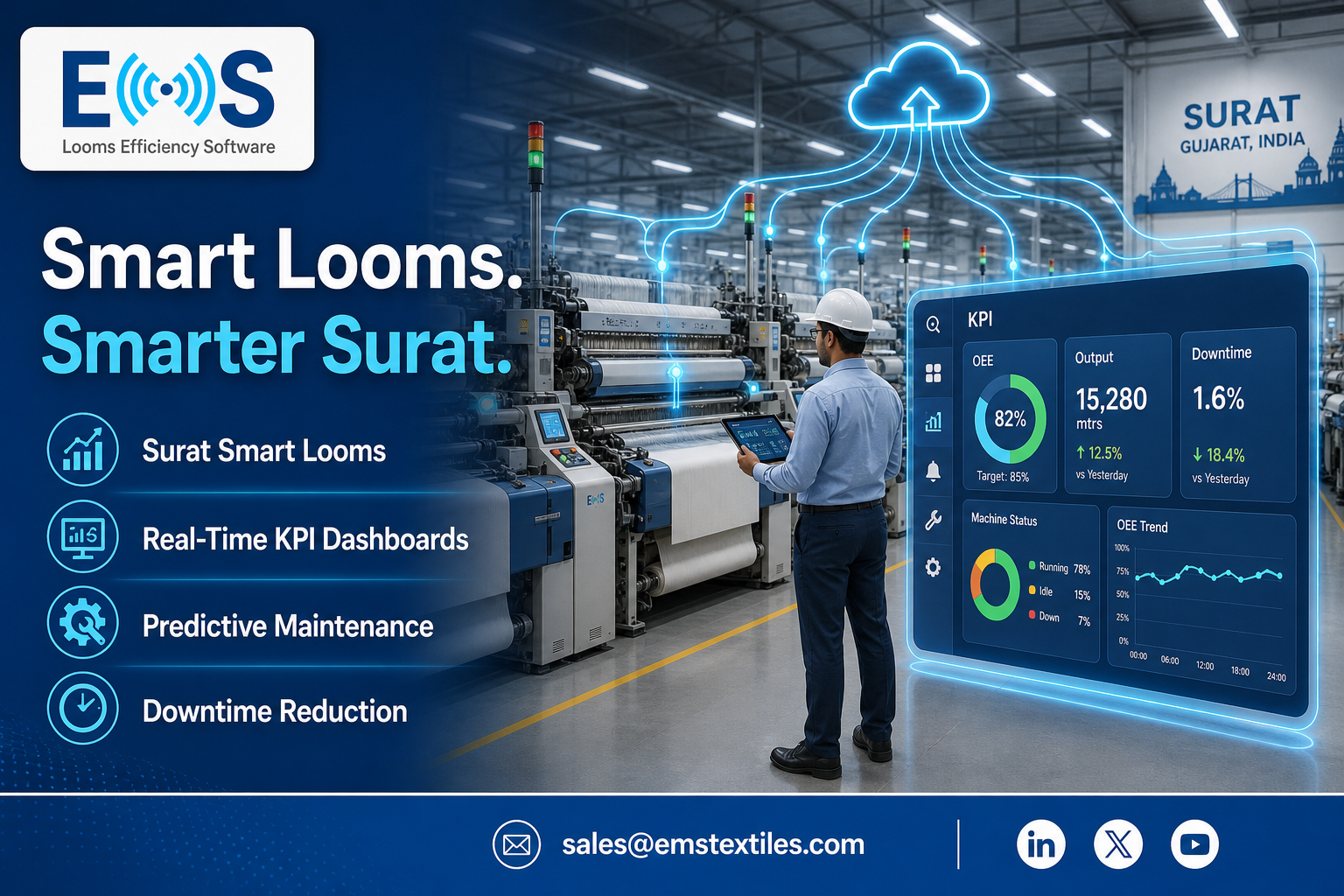
The foundation of a connected textile mill lies in the Internet of Things (IoT). This involves equipping your existing or new loom machines with a network of sensors and embedded software. These sensors continuously collect a wealth of data � from machine speed, stop/start events, warp and weft breaks, and power consumption, to environmental conditions and fabric quality parameters. This real-time data flow transforms traditional looms into 'smart' machines, providing an accurate, objective view of their operational status.
Cloud-Based Monitoring & Analytics
Once collected, this vast amount of data needs a central hub for storage and processing. This is where cloud computing comes into play. A cloud-based platform, like the one offered by EMS Textiles, securely stores all your loom data, making it accessible from anywhere, at any time. This centralized data then fuels powerful analytics tools. Instead of manual data entry and delayed reports, managers get instant access to critical KPIs like Overall Equipment Effectiveness (Efficiency), production efficiency, downtime reasons, and waste percentages, presented in intuitive dashboards.
Remote Machine Management
One of the most powerful aspects of Industry 4.0 is the ability to manage and monitor your textile operations remotely. With connected looms and a cloud platform, production managers can supervise multiple machines or even entire factories from their office, home, or while traveling. This means real-time alerts for critical issues, the ability to check machine status, and even, in some cases, remotely adjust certain parameters. This capability significantly reduces response times, minimizes manual intervention, and ensures continuous oversight.
Data Analytics for Predictive Insights
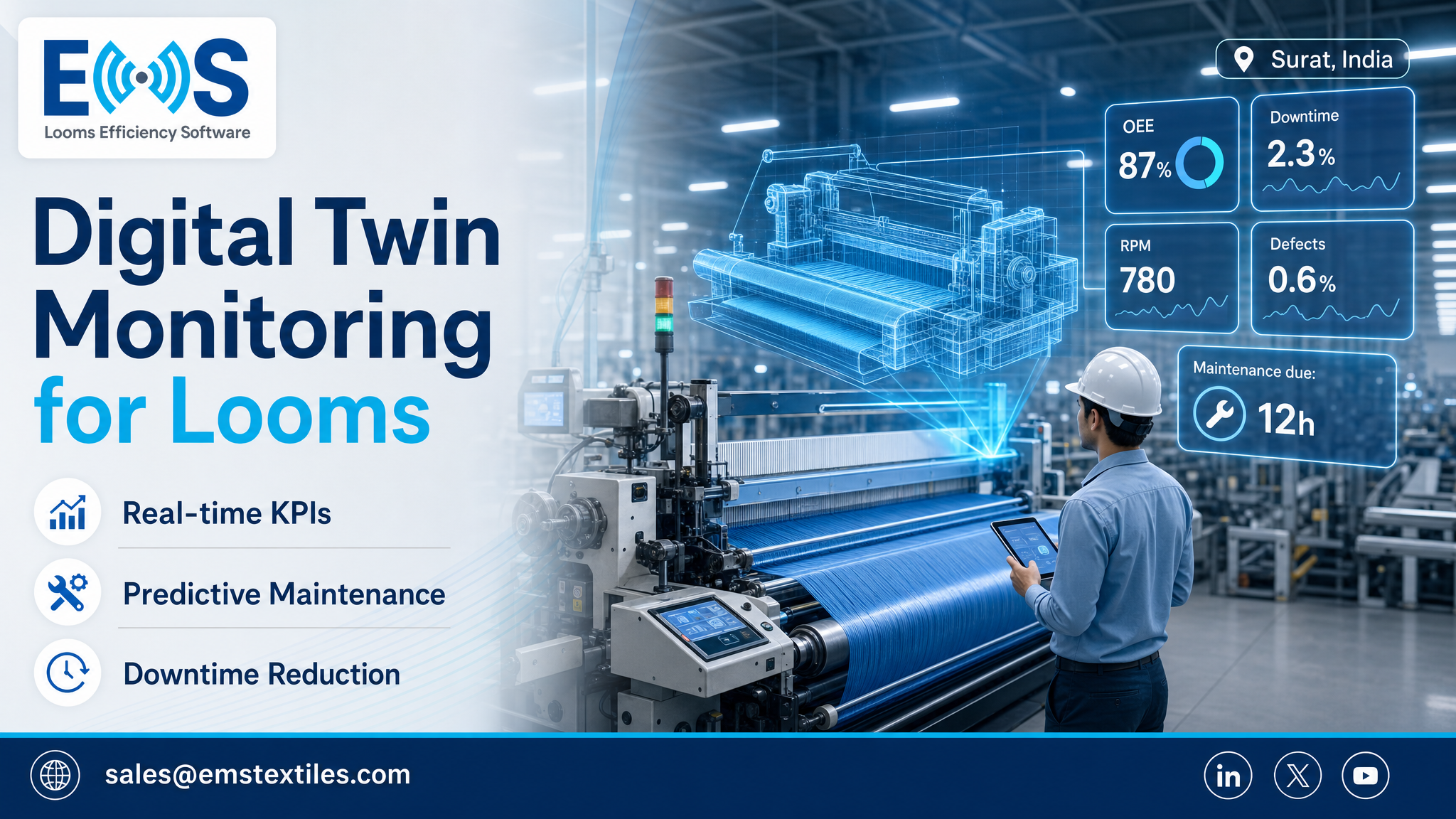
Beyond simply monitoring current performance, Industry 4.0 leverages advanced data analytics to provide predictive insights. By analyzing historical data and identifying patterns, the system can anticipate potential machine breakdowns, predict maintenance needs before they occur, and even forecast future production output. This shift from reactive maintenance to predictive maintenance dramatically reduces unexpected downtime, extends machine lifespan, and optimizes resource allocation.
Automated Production Reporting
Manual data collection and report generation are time-consuming and prone to human error. Industry 4.0 automates this entire process. With connected looms, all production data is automatically captured and compiled into comprehensive reports. These automated production reports provide accurate, up-to-the-minute information on shift performance, order progress, efficiency trends, and quality metrics. This streamlines administrative tasks and provides reliable data for strategic decision-making and compliance.
Tangible Benefits for Indian Textile Mill Owners and Managers
Adopting Industry 4.0 technologies isn't just about technological advancement; it's about achieving measurable business outcomes. For textile mill owners in India and their production managers, the benefits are significant and directly impact the bottom line:
- Increased Productivity & Efficiency: Real-time monitoring and data-driven insights allow for immediate identification and resolution of bottlenecks, leading to higher machine utilization and output.
- Reduced Downtime & Maintenance Costs: Predictive maintenance capabilities mean fewer unexpected breakdowns and optimized maintenance schedules, saving both time and money.
- Enhanced Product Quality: Consistent monitoring of machine parameters helps maintain optimal weaving conditions, leading to fewer defects and higher quality fabric.
- Better Inventory Management: Accurate production forecasts and real-time output data enable more precise raw material ordering and finished goods inventory control.
- Empowered Decision-Making: Access to comprehensive, real-time data allows managers to make informed, strategic decisions faster and with greater confidence.
- Significant Cost Savings: Optimization across all processes � from energy consumption to waste reduction � translates into substantial operational cost reductions.
- Competitive Edge: Mills embracing Industry 4.0 can offer better lead times, consistent quality, and greater flexibility, positioning them strongly in the market.
By leveraging these benefits, Indian textile mills can not only overcome traditional challenges but also thrive in an increasingly competitive global landscape, securing a sustainable and profitable future.
Implementing Industry 4.0: Your Roadmap with EMS Textiles
The journey to a smart textile factory might seem daunting, but with the right partner, it's a straightforward and rewarding process. EMS Textiles specializes in providing robust, user-friendly, and scalable Industry 4.0 solutions tailored specifically for the Indian textile industry. Our system integrates seamlessly with your existing loom machines, turning them into intelligent, connected assets.
| Feature | Traditional Approach | EMS 4.0 Solution (Connected Looms) | |||
|---|---|---|---|---|---|
| Data Collection | Manual, periodic, prone to errors | Automatic, real-time from every loom | |||
| Downtime Tracking | Reactive, often guesstimates, delayed reports | Proactive, precise reason codes, instant alerts | |||
| Reporting | Manual compilation, weekly/monthly, high effort | Automated, daily/shift-wise, customized, instant | |||
| Decision Making | Intuitive, based on experience & historical data | Data-driven, predictive, based on live insights | |||
| Accessibility | On-site only, limited visibility | Remote, cloud-based, accessible anywhere, anytime | |||
| Maintenance | Reactive (breakdown fixes) | Predictive (scheduled before failure) | Efficiency Calculation | Laborious, often inaccurate | Automatic, precise, real-time Efficiency |
Note for Mill Owners: Implementing an Industry 4.0 solution doesn't require replacing all your existing machinery. EMS Textiles' solutions are designed to integrate with a wide range of looms, allowing for a phased and cost-effective transition to smart manufacturing without major capital expenditure upfront.
Our solutions are designed to be practical, easy to implement, and immediately impactful, providing you with the tools to:
- Monitor loom performance and efficiency (Efficiency) in real-time.
- Identify and analyze reasons for loom stops and downtime.
- Track production targets, quality metrics, and order progress.
- Generate accurate, automated shift and daily production reports.
- Access comprehensive historical data for trend analysis and continuous improvement.
By partnering with EMS Textiles, you're not just investing in software; you're investing in a future where your textile mill operates with unparalleled efficiency, transparency, and profitability.
Ready to elevate your textile mill with Industry 4.0?
Contact EMS Textiles today to learn how our connected loom monitoring and data analytics solutions can transform your operations and secure your competitive advantage. Let's build the smart factory of tomorrow, together.
Ready to Transform Your Weaving Operations?
Book a free demo and see how EMS monitoring software can turn live loom data into faster decisions and measurable ROI.
Book a Free Demo