Every weaving factory wants higher output, better efficiency, and smoother delivery. But increasing production does not always mean buying more machines. Many factories can improve output by using existing resources more intelligently.
Why Production Improvement Matters
Better production means lower cost per meter, stronger delivery performance, higher profit margin, and better customer satisfaction. The key is to find where time and output are being lost.
1. Monitor Production in Real Time
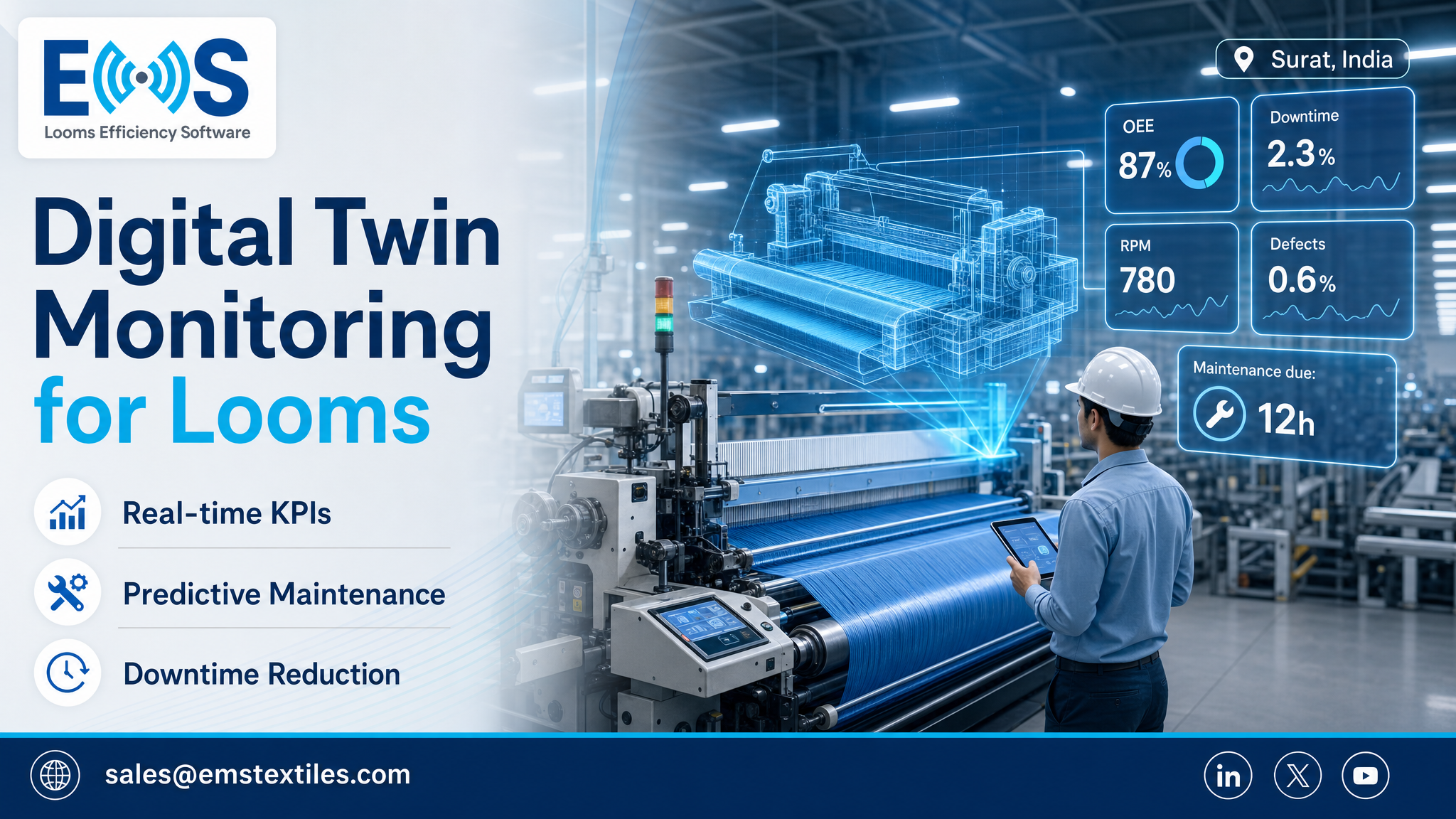
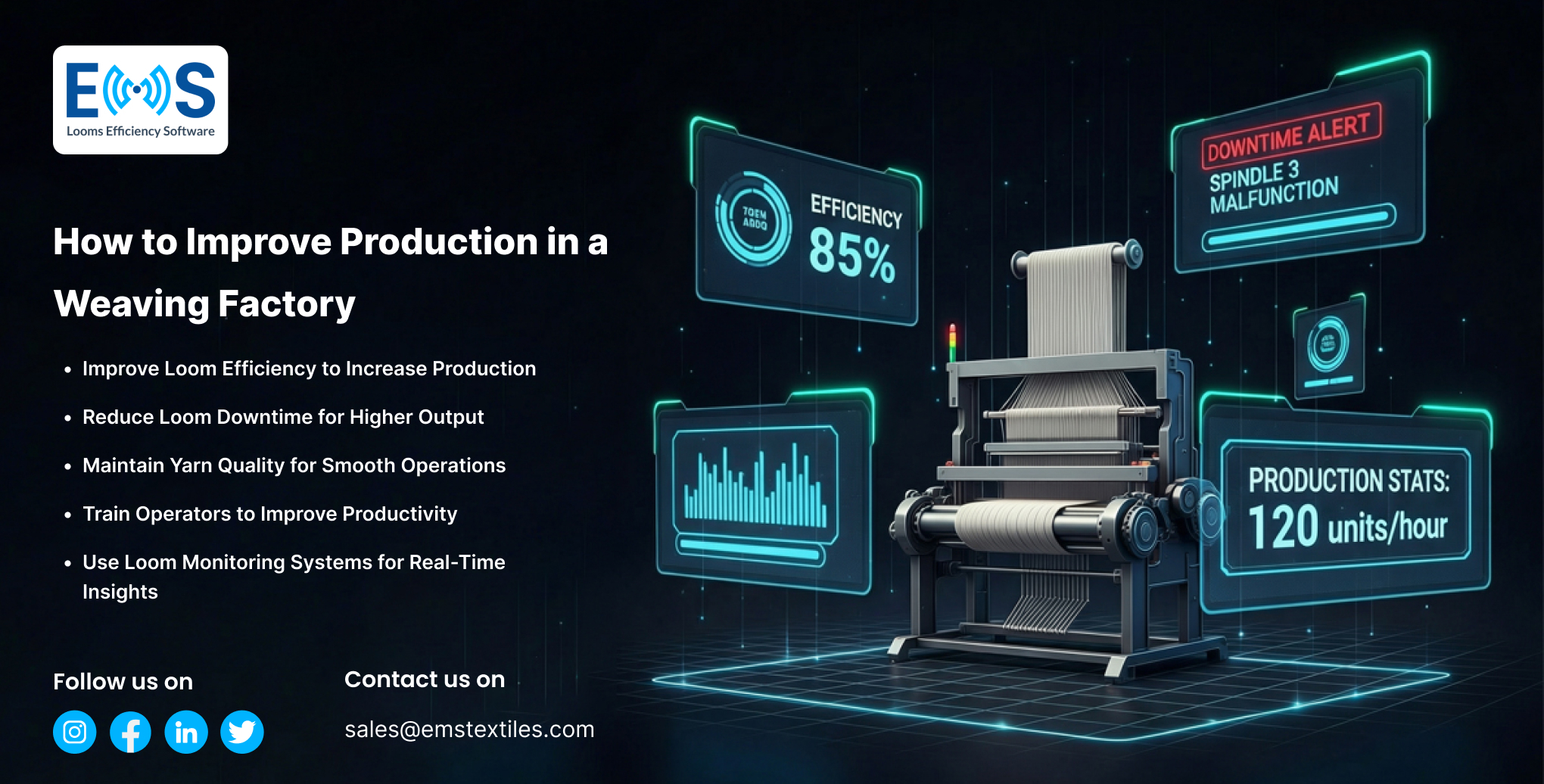
Factories cannot improve what they cannot see. Real-time monitoring shows machine status, running time, stoppages, and output during the shift. This helps managers act quickly instead of waiting for end-of-day reports.
2. Reduce Loom Downtime
Downtime is one of the biggest production killers. Track every stoppage reason, find recurring issues, and respond faster with alerts. Even small downtime reductions can create large monthly output gains.
3. Improve Operator Performance
Operators play a major role in production. Train them regularly, assign clear responsibilities, monitor response time, and support teams with simple performance data.
4. Improve Production Planning
Better planning reduces idle machines, unnecessary job changes, waiting time, and uneven machine loading. Group similar orders, prepare material in advance, and plan shifts according to machine capacity.
5. Follow Preventive Maintenance
Machines that are maintained regularly stop less often. Use daily, weekly, and monthly checklists to keep looms stable and reduce emergency breakdowns.
6. Control Yarn and Material Quality
Poor yarn quality leads to frequent breaks, defects, and stoppages. Check incoming material, track problematic yarn lots, and store material properly.
7. Use Accurate Reports
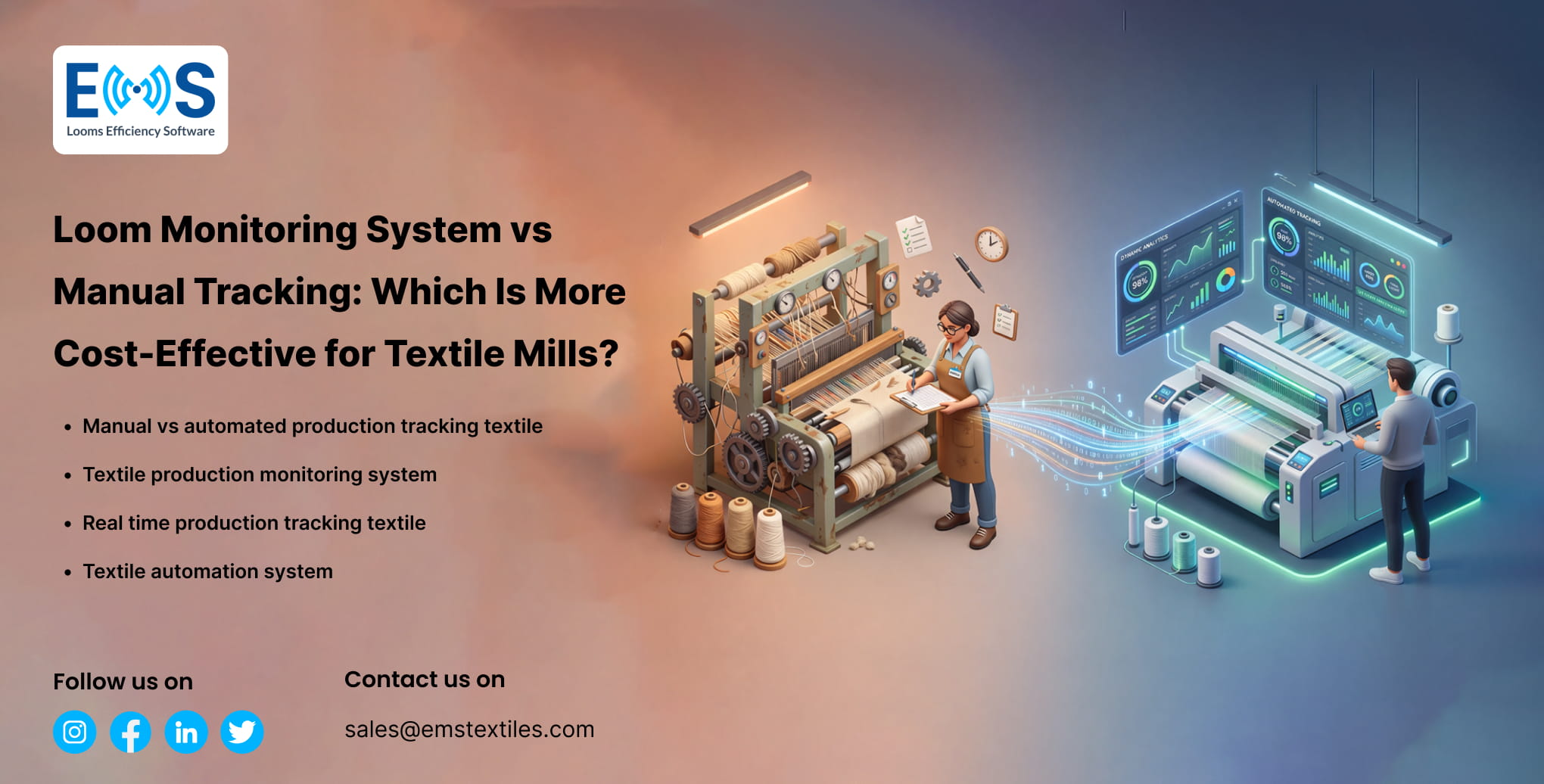
Manual reports can miss short stoppages and create data errors. Automated reports help owners understand machine efficiency, production output, downtime, and operator performance accurately.
8. Train Workers with Data
Training becomes more effective when supervisors can show real examples from machine data. Teams understand where delays happen and how they can improve.
Manual Management vs Monitoring System
| Area | Manual Management | With Monitoring System |
|---|---|---|
| Production visibility | Delayed | Live |
| Downtime tracking | Incomplete | Accurate |
| Reports | Manual | Automatic |
| Decision-making | Based on assumptions | Based on data |
| Efficiency improvement | Slow | Measurable |
How EMS Helps Improve Production
EMS gives weaving factories live dashboards, machine monitoring, downtime alerts, operator tracking, historical reports, mobile access, and automatic report generation. It helps owners and managers see production clearly and make faster decisions.
Improve output without guesswork.
EMS helps factories use real-time data to reduce downtime, improve loom efficiency, and increase production from existing machines.
Ready to Transform Your Weaving Operations?
Book a free demo and see how EMS monitoring software can turn live loom data into faster decisions and measurable ROI.
Book a Free Demo